Why a Bench Changes the Shape of a Pause
Bench placement shapes whether a pause feels brief, social, or observant; learn to read orientation, approach paths, shade, and nearby activity.
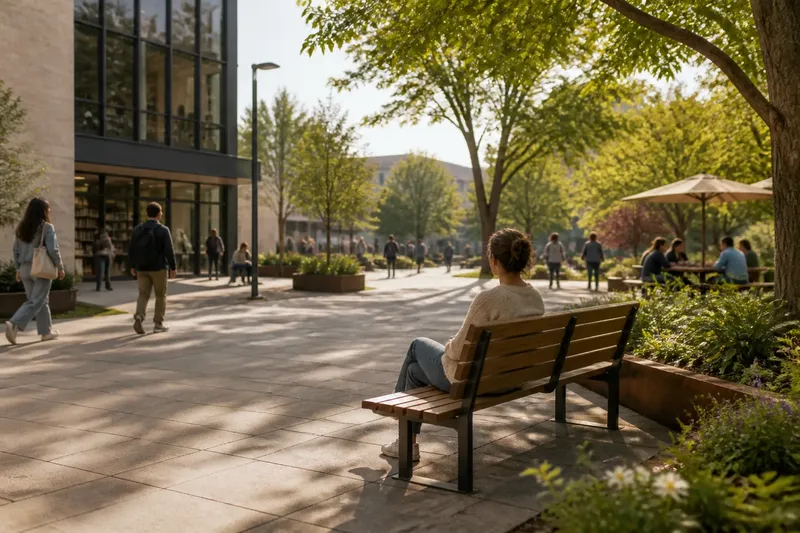
You stop beside a bench outside a library, but the seat faces a blank wall while the footpath hums behind you. Sitting feels less like resting than turning your back on the place. Bench placement can change that small decision: it affects whether a pause stays brief, opens into conversation, or becomes a chance to watch nearby activity.
Reading a bench means looking beyond the seat itself. Notice how people approach, what they face, who can sit nearby, and what the surrounding space invites them to do. Follow the scene in that order, and the bench’s social character becomes easier to see.
Start with the route that brings people to the bench
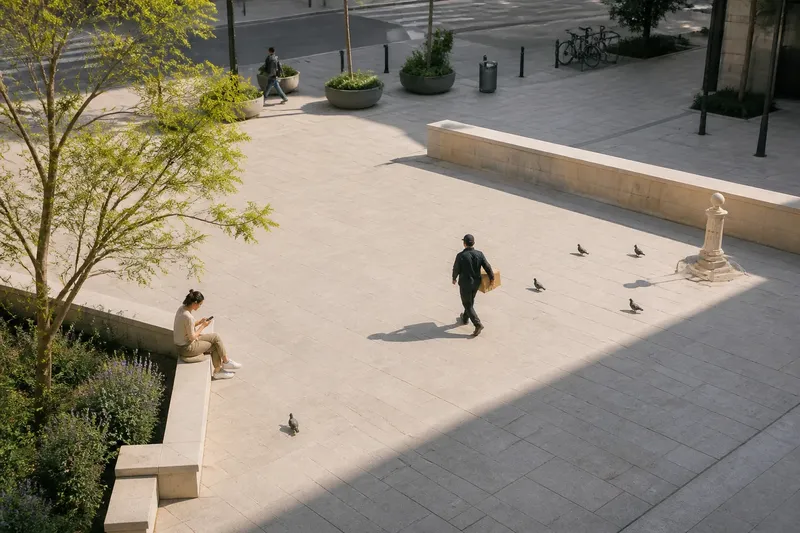
Before studying the view, watch the paths around the seat. A bench tucked directly beside a busy walkway may catch passersby who need a moment, but it can also make sitting feel exposed. People may keep their bags close or avoid lingering if every person passing seems to brush past their shoulder.
Look for the natural approach: a path from a transit stop, a doorway, a garden entrance, or a crossing. If someone has to step across a planted bed or squeeze between a table and a wall to reach the bench, the route may feel awkward even when the seat looks inviting. A clear approach gives a person room to arrive, pause, and leave without disrupting others.
Then notice what happens to the through-route. A bench placed at a path junction can make a pause visible and convenient, yet it may also encourage people to stop where others need to turn. A little separation between sitting and moving lets both activities happen without a small collision of intentions.
Trace the approach and departure before deciding whether the location feels comfortable.
Read the bench’s orientation as a social cue
A bench facing the main flow of activity offers a view of people coming and going. That arrangement can suit someone waiting for a companion or enjoying the life of a square. It may feel less restful to a person who would rather sit without meeting the gaze of every passerby.
A seat turned toward a garden, fountain, or street scene gives the pause a shared focus. Two people can sit side by side and talk without holding eye contact, or simply watch the same thing in quiet. A bench facing a wall or dense hedge may instead offer a sense of enclosure, though it can leave a seated person feeling cut off from the wider place.
Seats arranged at an angle often leave room for both conversation and observation. The angle matters because a pair can turn toward one another without feeling as if they are performing for the path. A single bench set squarely toward a walkway makes watching easy, but conversation may require a deliberate turn.
Ask what the seat makes effortless: watching, talking, or being left alone.
Check what happens beside and behind the seat
The edges around a bench shape how long a pause can comfortably last. A tree canopy or building overhang may soften sun or light rain. A nearby drinking fountain, low garden edge, or café window can give the seat a sense of belonging to a lived-in setting. By contrast, a loud service door or a blast of wind between buildings can make a pleasant-looking spot hard to occupy.
Pay attention to the back of the bench. A solid wall or planting bed can make sitting feel sheltered, while an open back may suit a lively promenade where people want to see in every direction. Neither arrangement is automatically better. The question is whether the setting offers the kind of exposure or retreat that fits the place.
Nearby features also affect who can use the pause. Is there room for a stroller or wheelchair beside the bench without blocking the route? Can someone sit down without stepping over an awkward curb or crossing loose gravel? A bench may be visible and still be difficult to approach. Where access depends on a particular surface, fitting, or local requirement, follow the relevant guidance.
Consider the whole resting area, not just the seat’s footprint.
Use nearby activity to judge the kind of pause
Watch the activity that gathers around the bench. Near a playground, a seat may support caregivers who want to keep children in view. By a bus stop, it may serve a short wait and a quick departure. Along a waterfront path, it may invite a longer look at the view. The same piece of furniture can take on different roles because its neighbors set the tempo.
Notice whether people can sit together without blocking others, and whether a lone visitor can use the bench without seeming to occupy a group’s space. A pair of benches facing each other may encourage conversation; benches aimed in the same direction may make shared watching easier. Several seats clustered too tightly can make a quiet pause feel crowded, while a lone seat in a broad open space can feel conspicuously isolated.
Imagine a small library courtyard with a bench near the entrance, facing a row of planters. A visitor waiting for a friend could sit and watch the doorway, but the entrance traffic might make conversation feel exposed. Turning the bench slightly toward the planters while leaving a clear view of the door could support both a quiet wait and a greeting when the friend arrives. The observable difference would be where the seated person’s attention naturally falls, not a promise that everyone will use it the same way.
Questions that clarify how a bench shapes a pause
Where should a bench face in a public space?
Face it toward the activity people may want to observe, or toward a shared feature such as a garden or fountain. If conversation matters, consider an angle that lets people turn toward each other without facing the busiest flow directly.
Does a bench beside a path make people stay longer?
It can make a short stop convenient, but close passing traffic may also discourage lingering. Look at the path’s width, movement, and how much personal space remains around a seated person.
Why do some benches invite conversation while others do not?
Orientation, spacing, and a shared view all shape how easy it feels to talk. Seats angled toward one another support face-to-face exchange; seats side by side can make casual conversation feel less demanding.
What should I notice when assessing an existing bench?
Check its approach, view, shelter, nearby activity, and effect on the walking route. Then watch whether the setting seems to support a quick rest, a shared conversation, or quiet observation.
Make a practical reading before proposing a change
Take a short visit at a time when the place is being used, and observe without treating one moment as the whole story. Note the direction people face, where they pause before sitting, whether companions join them, and if anyone seems to avoid the seat. A second visit in different conditions can reveal whether shade, noise, or nearby activity changes the experience.
- Approach: Check whether the path to the bench crosses planting or pinches the main route. If it does, consider shifting the seat or clearing a direct approach; if it does not, keep the route and assess the next condition.
- Orientation: Check whether the seat faces a useful view, shared focus, or a stream of passersby. If the view seems uncomfortable or disconnected, consider turning the bench; if it supports the intended pause, leave its direction unchanged.
- Conversation: Check whether two people can talk without blocking others and whether a person alone can sit without feeling surrounded. If either use feels awkward, consider changing the spacing or angle; if both remain possible, retain the arrangement.
- Shelter: Check for shade, wind, noise, and exposure around the seat. If one condition makes the spot difficult to occupy, consider another location or a suitable nearby shelter; if the setting fits its intended use, avoid adding an unnecessary screen.
- Access: Check whether a person can reach the seating area without loose gravel, an awkward curb, or obstruction. If access is difficult, seek an accessible route or consult relevant local guidance; if the approach is clear, preserve that access while considering other changes.
- Movement: Check whether the bench interferes with walking, turning, or waiting nearby. If it narrows a route or blocks a turn, consider relocating it; if people can pass and pause comfortably, keep the position.
Say a library courtyard has a bench facing its entrance, with a planter row behind it and a clear path on one side. The stated starting point is that visitors can reach the seat, but a person waiting there feels exposed to doorway traffic. First, observe the approach and confirm the path stays clear; that supports keeping the seat in its current general location. Next, notice that the entrance is useful to watch but the planters offer a quieter shared view. Then consider turning the bench slightly toward the planters while preserving the doorway in its sightline. The resulting decision is to adjust orientation, not move the bench; the expected observable result is a seated visitor facing the garden more naturally while remaining able to notice someone arriving. If the turn were to obstruct the path, the alternative would be to leave the bench in place and consider a different seating arrangement.
Use each observation to identify a specific choice. A seat that blocks a turn may need a different position; one that offers no view of the place may need a changed orientation; a useful seat with an exposed approach may benefit from a clearer edge or neighboring feature. The point is not to make every bench social or secluded. It is to let its position suit the pause the surrounding place can support.
Bench placement is often the quiet design decision that shapes a public pause. To understand what a bench is doing, watch where people come from, what they can see, and how easily they can remain or move on. That small reading can turn an ordinary seat into a more legible part of shared space.