The Empty Plaza Is Not a Failed Plaza
An empty plaza can still serve its neighborhood. Learn how to read quiet use, changing conditions, and access barriers before judging the space.
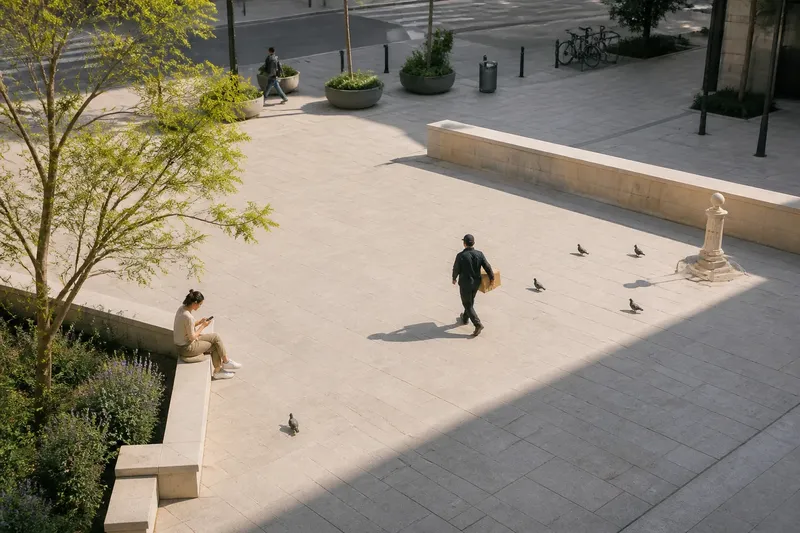
At midday, a plaza holds a few pigeons, a delivery worker crossing the paving, and a patch of sun sliding across a low wall. The empty plaza may look unused, but one quiet moment cannot tell you whether the square serves its neighborhood. Start by noticing how people move, what the weather allows, and whether the entrances feel reachable.
Notice the small ways people use an empty plaza
Public life does not always gather a crowd. Someone may cut across the square toward a bus stop, pause to check a phone, wait for a friend, or sit near the edge while watching a child. These brief visits can matter even when the plaza looks still.
Look for walking lines, shaded ledges, and places where people pause. A clear route through the paving may connect useful destinations. A fountain edge may attract visitors on a warm afternoon, while a low wall offers a quick resting place.
Consider who can use the square without buying anything or joining an event. Passing through, waiting, and taking a short outdoor break are ordinary forms of public use.
On a quiet visit, write down the small actions you actually see.
Compare the plaza at similar times
A square beside offices may be quiet early, busy at lunch, and nearly empty after workers leave. One near a school may see brief activity around arrival and dismissal. A plaza by a transit stop may carry a steady stream of people who rarely stay.
One visit captures only one moment. Return at different times and on different kinds of days, and note nearby schedules and destinations such as a library, market, community center, or place of worship.
Say you visit a paved square on a weekday morning and see almost nobody sitting. Imagine returning at school dismissal and finding caregivers waiting near the entrance while children cross the center. The starting point is the same quiet-looking plaza; the action is returning at a time shaped by a nearby routine; the expected observable result is a different pattern of use. That change would suggest timing matters, though it would not by itself show whether the layout works well.
Compare like with like: a weekday morning with another weekday morning.
Read weather and seasonal conditions
Sun, wind, rain, heat, and cold change how long people want to stay outdoors. A square without shade may feel harsh in strong sun. A wind-exposed plaza may empty on a blustery day, even if people still use it as a route.
Notice whether trees, awnings, or arcades offer shelter. Check whether rain leaves standing water on a walking line and whether seats have both sunny and shaded options. A square need not suit every condition, but its available choices help explain who stays.
Nearby routines shift with the season too. Outdoor dining may pause, planting may go dormant, or a school may close for a break. Record conditions beside activity: “quiet in the rain” says more than “quiet.”
Distinguish preference from a barrier
A square can be open in name but difficult to enter. Steps without an accessible route, a narrow entrance, broken paving, or a stressful street crossing may stop people before they reach the center.
Other clues are less direct: no comfortable place to sit, little shade, poor lighting at dusk, or signs that discourage ordinary behavior. Watch for people approaching and turning away, taking a detour, or pausing at the edge rather than entering. Those observations are clues, not proof of why someone chose a route.
A broad open surface may suit people who need room to move but offer little shelter to someone seeking a quiet corner. Ask whether there are reasonable ways to enter, cross, and pause, rather than expecting one arrangement to suit everyone.
For questions involving accessibility, lighting, or physical hazards, treat a casual visit as an initial observation, not a technical assessment. Consult qualified professionals or local authorities where needed.
Watch who can stay without being moved along
Notice whether people sit without buying anything, whether teenagers can wait together, and whether someone using a mobility device can pause without blocking the main route. Look at how seating, signs, fences, and maintenance shape those choices.
Armrests or divided benches can limit how people sit or rest. Overflowing bins, damaged surfaces, or neglected planting may signal a maintenance problem, though none proves that a space is hostile. Look for actual interactions and conditions rather than guessing intent from an empty scene.
Imagine a small square with clean paving and a clear path, but only a few narrow seats in direct sun. The starting point is a passable square with little comfortable seating; the action is adding a shaded place to sit; the expected observable result is whether people begin using that option. The tradeoff is that one added seat may improve a pause without changing the plaza’s overall activity.
Ask who can enter, stay, and leave comfortably—not only who appears in a photograph.
Trace the routes into the square
A plaza depends partly on the streets, doors, and destinations around it. Blank walls can make an edge feel uninviting. A busy road may separate the square from the neighborhood it is meant to serve, while parked vehicles can hide an entrance from the sidewalk.
Walk an actual approach route. Notice whether paving links naturally to nearby sidewalks, crossings point toward the entrance, and gates or curbs interrupt the way in. Check whether the square is visible from places people already visit.
Nearby activity can draw people inside or keep them at the edge. A café terrace or market stall may animate a frontage; a blank wall may offer little reason to stop. Follow a route from the sidewalk instead of judging the plaza only from its center.
What should you check before judging an empty plaza?
What time and day did you visit?
Record the time and whether it was a weekday, weekend, or event day. If your visit missed nearby routines, return at a comparable time shaped by those routines before drawing a conclusion.
What were the weather and seasonal conditions?
Note sun, wind, rain, and whether nearby activities were in season. If conditions made staying uncomfortable, compare another visit in different weather before treating quiet as a design problem.
Could people enter and move through comfortably?
Walk from the sidewalk and look for steps, blocked approaches, confusing edges, and damaged paving. If a route appears obstructed or difficult, document the location and seek appropriate local or professional guidance rather than assuming visitors simply prefer not to come.
Who could pause or stay without buying anything?
Look for usable seating, shade, and signs or interactions that affect lingering. If people have few comfortable options, identify the specific missing choice and consider that targeted issue before calling the whole square unsuccessful.
Keep a concise field checklist
On each visit, record what you can see and the decision that follows. These notes help separate a quiet moment from a recurring obstacle.
- Check the visit time and nearby schedules; if the square is quiet outside likely activity periods, return during a relevant routine, otherwise compare another visit at the same time.
- Check the weather and available shade or shelter; if conditions make lingering uncomfortable, revisit in different conditions, otherwise note that weather is less likely to explain the quiet.
- Check entrances for steps, narrow passages, or blocked approaches; if a route appears difficult, document it and seek qualified access advice, otherwise trace the route farther from the sidewalk.
- Check whether crossings and paths lead clearly into the plaza; if a crossing or edge breaks the route, report or investigate that specific connection, otherwise observe where people choose to enter.
- Check for comfortable places to sit without purchasing anything; if none are available, consider a seating or shade adjustment, otherwise note whether people use the existing options.
- Check signs, fences, and interactions that may discourage ordinary activity; if a specific cue appears to restrict use, ask the responsible manager about it, otherwise avoid inferring a rule from the empty scene alone.
- Check paving, standing water, lighting, and visible maintenance concerns; if you see a hazard or recurring obstruction, document its location and contact the responsible authority, otherwise record the condition as a possible factor rather than a verdict.
Separate what you saw from what you inferred
Write down visible facts, such as a blocked entrance or a person turning back, separately from interpretations such as “people dislike the plaza.” If the question is about access or belonging, listen to people who use the area and those who avoid it; their reasons may not be visible during a brief visit.
A crowded event does not settle the question either. It shows that people gathered on that occasion, not that the square supports everyday use. The empty plaza deserves the same care: note the time, conditions, routes, and choices before deciding what its quiet means.
Use the search phrase empty plaza as a starting question, not a verdict. A useful field note names the entrance, conditions, and observed action so that any later discussion can focus on a specific change rather than a vague judgment.