How Public Noticeboards Help Local Messages Find Their Readers
Public noticeboards make local announcements visible where people already gather. Learn how to choose a site, shape readable notices, and keep the board useful.
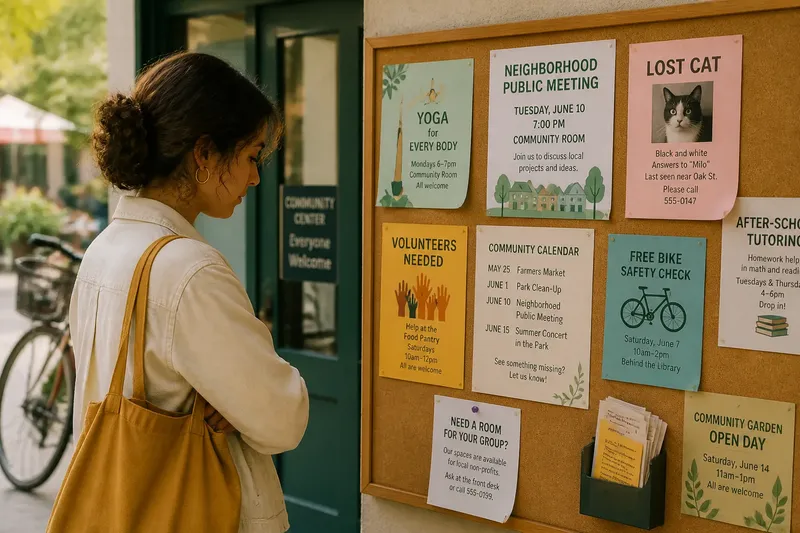
A paper flyer curls at the corners beside a library door as someone pauses to read it on the way out. A public noticeboard can turn that brief pause into a useful encounter: local information sits in a shared place, ready for people who happen to pass.
Public noticeboards make passing a chance to notice
A noticeboard is more than a flat place to pin paper. Its position shapes who sees a message, at what pace, and beside which other messages. A board at a community center may reach people arriving for a class; one near a market entrance may catch shoppers who came for an entirely different reason.
That incidental audience is distinctive. People do not need to follow an account, join a group, or know the right search terms. They need only pass the board and have a moment to look. The audience is not everyone in a neighborhood or a neatly defined membership. It is the changing stream of people who use that location.
Physical notices also share space visibly. A class announcement may sit beside a lost-pet flyer and a call for volunteers. The arrangement can suggest connections between activities, or simply show that a place serves many needs. The board does not sort every message into a personalized feed. Viewers see the cluster and choose what deserves attention.
Use a noticeboard when discovery among passersby matters more than reaching a precisely selected audience.
The board’s location shapes who can encounter it
Start with the place where people naturally slow down. A board beside a doorway can be easy to find but awkward to read if people are trying to get through. One tucked inside a lobby may offer a calmer pause, yet miss visitors who do not enter the building. The right spot depends on the intended readers and the routes they already take.
Consider the approach as well as the viewing point. Can someone see the board without blocking a ramp, queue, or narrow passage? Is it sheltered enough for notices to stay readable? Does its position work for seated viewers as well as people standing? These are questions of access and everyday courtesy, not decoration.
Imagine a neighborhood association wants to invite nearby residents to a public meeting. The starting point is a notice posted inside a room used only by association members. The association moves it to a shared entrance, places it where seated and standing visitors can read it, and checks that people can pause without obstructing the doorway. The expected observable result is an invitation that passersby can approach and read without interrupting the entrance; the tradeoff is that the shared location may bring more readers than the association can address individually.
Choose a board’s site by tracing actual foot traffic, not by assuming the most central wall reaches everyone.
Match the announcement to how people will read it
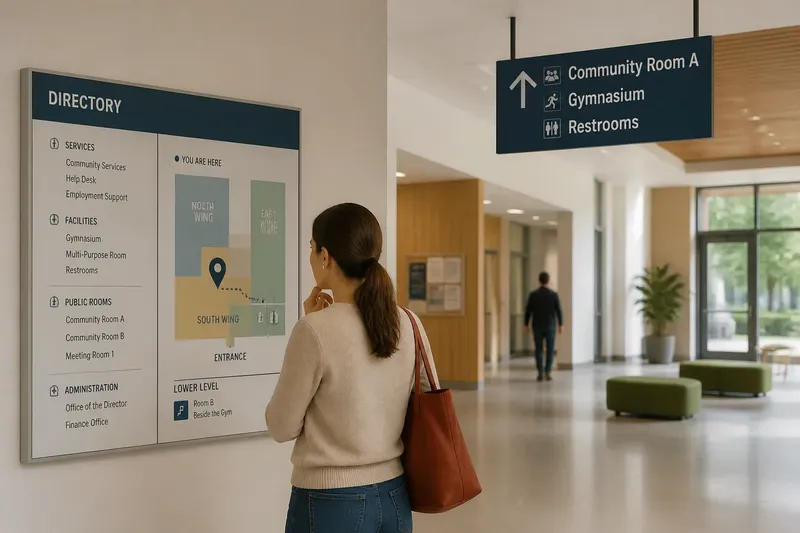
A physical board suits short, local messages that can be understood at a glance and followed up later. A poster can offer a date, place, purpose, and contact route in one compact view. A map can orient visitors to nearby services. A community calendar can show several events together, as long as its layout does not turn into a thicket of tiny print.
Some information needs more room than a noticeboard can give. Long policy documents, frequent changes, or private details are poor fits for a public sheet. A board can point toward a fuller source, such as a staffed office or a clearly identified website, but the essential local fact should still be visible on the notice. A person should not have to scan a code just to learn when an event begins.
Compare the board with a digital feed by asking what the message needs to do. A feed can travel beyond one location and can be updated without replacing paper. A board puts a message in a shared setting, where people can encounter it without actively searching. Neither channel does every job well; using both can help when an announcement needs local visibility and wider reach.
- Use a noticeboard: If the announcement is stable, nearby, and benefits from accidental discovery, post it on the board; if it needs frequent changes, use a digital channel instead.
- Use a digital channel: If readers need updates away from the site, use a feed or website; if the audience gathers at one location, add a board notice as well.
- Use both channels: If a public invitation should be easy to encounter locally and share remotely, post it in both places; if the message is private, contact the person directly instead.
- Use direct communication: If the message concerns an individual, contact them privately; if it is a public announcement, remove personal details and use an appropriate public channel.
- Keep essential details on paper: If the event time or location is missing from the notice, add it before posting; if the notice is already readable at a glance, use a link only for additional information.
- Choose a follow-up route: If the intended readers can use a staffed office or printed web address, include that route; if access to it is uncertain, provide another clear way to ask for details.
Keep the main point readable on the board, even when another channel carries extra detail.
How should a public noticeboard be organized?
How many notices should stay on the board?
Leave enough space for each notice to register as a separate message. If every open patch is filled, a new poster may be present but practically invisible. Remove expired material and make room for current notices without treating the board as a contest for the largest sheet.
What makes a paper notice readable?
Use a clear heading, plain wording, and strong contrast between text and background. Put the date, location, and requested action near the top, where a quick glance can find them. A small amount of useful detail beats a dense block of text that asks a passerby to stop for a long read.
Should every announcement include a phone number or web address?
Include a follow-up route that suits the audience and the message, such as a staffed office, an email address, or a short web address. Do not make a phone or online option the only way to understand the notice if the essential information can be printed clearly. Avoid displaying personal contact details without permission.
Who should remove old flyers?
Make responsibility clear to the people who maintain the location, and set a simple local routine for checking dates and taking down outdated notices. A board with no visible upkeep can make current announcements seem unreliable. If a building or municipality has posting rules, follow its posted requirements.
Maintenance makes the board feel like shared space
Because a noticeboard is visible to everyone who passes, its condition communicates something about how the place is cared for. A clean frame, working pins or clips, and an obvious area for new material invite participation. Torn paper, overlapping layers, and notices with dates long past can make the same surface feel abandoned.
That does not mean every board needs a formal display system. A few simple conventions can help: a clear heading for the board’s purpose, a contact for questions, and a regular review by whoever manages the site. If several organizations post there, a shared rule about what belongs can prevent one voice from crowding out the rest.
There is also a civic choice in deciding who may post. An open board gives local groups room to speak, but it may need someone to remove harmful or irrelevant material. A tightly managed board can stay orderly while excluding informal groups whose events matter locally. The policy should be visible and understandable, so users know whether the surface is open to community postings or reserved for official announcements.
When posting rules depend on a building manager or local authority, check their instructions before placing material.
Use a noticeboard when local visibility is the point
A public noticeboard’s particular value lies in being attached to a place. A message shares a wall with other messages and can reach people through their ordinary movements. That makes it useful for announcements tied to a library, market, community room, or other shared destination.
Before choosing a channel, ask where the intended reader will be, how long the message will remain useful, and what they must understand at a glance. If the announcement belongs to a specific place and benefits from being noticed by people already there, a well-sited public noticeboard may fit. If it needs rapid updates or a distant audience, use another channel alongside it.
Put the essential information where the encounter can happen, and keep the board legible enough for a passerby to decide, without pressure, whether to stop. For a public noticeboard, that simple act of making room and keeping the message clear is what lets a shared wall serve its readers.